
This phenomenon has a scientific name, but the idea is simple: our brain constantly fills in the gaps. As soon as it spots a familiar pattern, it immediately reconstructs it. That's why we see a profile in a rock, an animal in a cloud, or a smile in the foam of our coffee. Our past experiences form an internal library from which the mind quickly draws. As a result, we believe we "recognize" something that exists only in our interpretation. This is one of the most fascinating mechanisms of visual pareidolia .
Your mission: find all the hidden faces
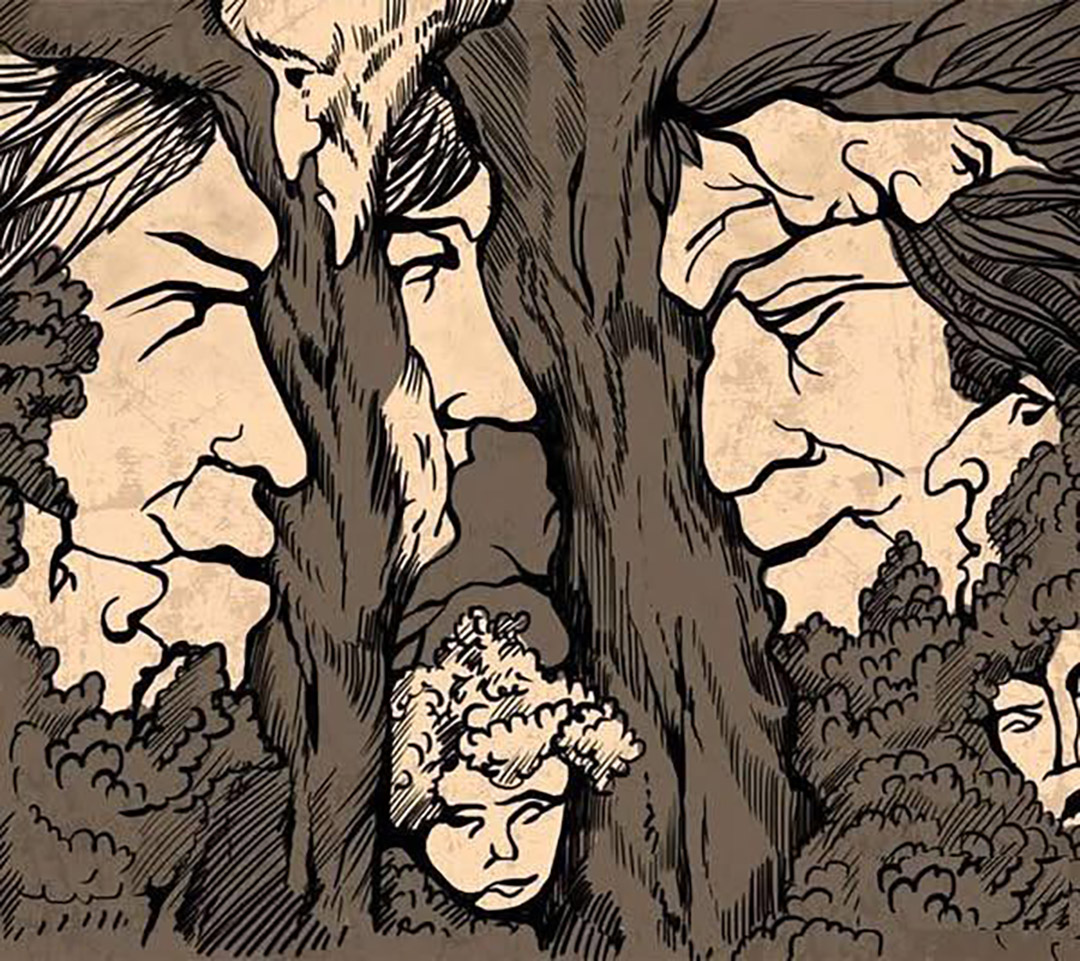
Imagine being shown this scene of intertwined trees and given twenty seconds, not a second more. At first glance, everything seems normal. Yet, between the trunks and branches, several human faces await discovery. Some are obvious, others blend almost completely into the background. Your challenge: spot as many as possible before time runs out, like in a timed game that tests your perception.
What your score reveals (or doesn't reveal) about you
Once the timer stops, there's always that moment of comparison: "I found five!" while your friend spots eight. Does this reveal intelligence, creativity, or observational skills? Not really. These illusions aren't official tests but games that reflect our different ways of looking at an image. Above all, they remind us that our minds can adopt a new perspective in an instant and reveal details that were invisible just seconds before.
Answer :

There are a total of ten faces hidden in the drawing.