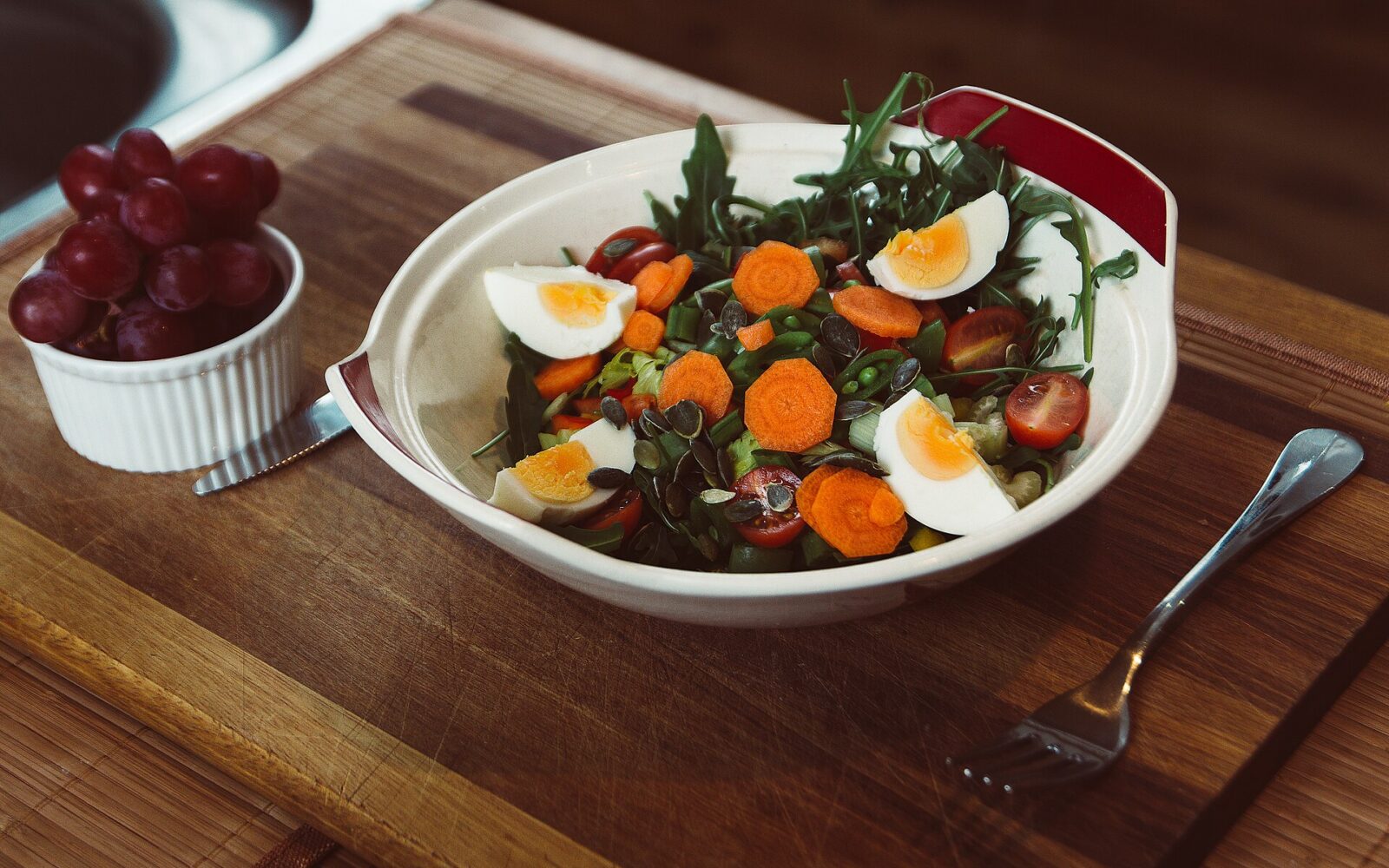
If you want to give it more heft, chickpeas fit naturally. So does a soft-boiled egg, roast chicken, or a handful of toasted seeds. But the base should still feel complete before those additions arrive. A recipe becomes trustworthy when the extras feel optional rather than necessary rescue work.
Why this is good meal-prep food
It stores well, travels well, and tastes good both chilled and at room temperature. That matters more than perfection. A salad that waits well in the fridge is often more useful than a hot dinner that cannot survive tomorrow.
If you want to stretch it further, add chickpeas or a jammy egg. If you want it lighter, increase the herbs and lemon. The base is flexible, which is part of the reason it earns repeat status.
Meal-prep food also needs to hold its tone. This bowl does not become depressing by day two because the carrots retain sweetness, the couscous remains soft, and the feta keeps sending little hits of salt through the grains. A squeeze of fresh lemon before serving can wake it back up, but the structure of the salad is already on your side.
Why this kind of salad belongs on a food site
A good food journal earns reader confidence not only through grand centerpiece recipes but also through the smaller, more adaptable dishes that real kitchens rely on. This salad shows whether the site understands lunch, leftovers, and the practical middle ground between side dish and main course. If it reads clearly and behaves as promised, that tells readers something good about the rest of the archive too.
That is one reason salads deserve better treatment than they often get online. A real salad recipe is not a list of ingredients tossed together in a bowl. It is an arrangement of textures, temperatures, and seasoning choices that makes ordinary produce feel worth returning to.
How the bowl stays interesting through the week
Part of the success here comes from contrast that holds. The carrots keep sweetness, the feta keeps salinity, the herbs keep freshness, and the couscous keeps the whole thing from feeling too sharp. Because those roles are distinct, the salad remains readable even after it has sat for a day. The flavors do not collapse into one blunt note.
That is especially useful for lunch cooking. Many practical lunches are good only in theory. They travel badly, become soggy, or lose all appeal by noon the next day. This bowl survives because its core ingredients are sturdy. It rewards the kind of planning that real weekdays require.
A recipe like this also gives readers permission to treat a salad as a true meal rather than as a moral side dish. It has sweetness, salt, starch, acid, and texture in balance. That is why it belongs in a launch archive that wants to look lived-in rather than decorative.
That balance is also why the bowl stays flexible without becoming vague. It can sit beside roast chicken, work as a lunch on its own, or absorb a few pantry additions without losing its shape. The best practical salads have that quality. They are open enough to adapt but strong enough to remain themselves.
That combination of adaptability and definition is what makes the salad feel publishable rather than provisional. It solves a real meal problem, keeps its character in the fridge, and asks for ordinary ingredients handled with attention. That is exactly the kind of practical confidence a launch archive should show.
Keep reading
For another practical dinner built from ordinary ingredients, try Tomato Butter Beans on Toast with Garlic and Lemon. If you like kitchen pieces that think about usefulness over novelty, read Why Some Kitchen Rituals Matter More Than New Gadgets. And for a note on how recipes are handled here, open the Editorial Policy.
Recipe card