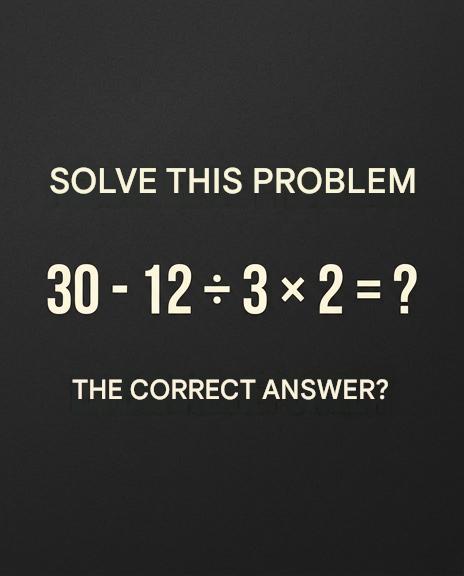
To avoid any confusion, simply remember a key rule learned at school (and sometimes a little forgotten):
division and multiplication are always performed before subtraction and addition.
No need for a complicated formula, just a logical order to follow. Think of it like a priority queue: some operations take precedence over others.
In our case, this means that we definitely do not start with 30 – 12. No, we first deal with what happens between 12, 3 and 2.
Step-by-step solution to avoid making mistakes again
Let's take the time to break down the operation calmly:
12 ÷ 3 = 4
4 × 2 = 8
Once these steps are completed, the expression becomes much simpler:
30 – 8 = 22
And there you have it! The final result is 22.
Simple, right? But you still had to follow the right order.
The most common mistake (and how to avoid it)
Many people make the following mistake:
they start directly with 30 – 12, which gives 18, and then continue the calculations. But this method doesn't respect the order of operations… and leads to the wrong answer.
To avoid this trap, adopt a simple little habit:
before calculating, identify the divisions and multiplications in the operation.
It's like highlighting the important steps in a text: your brain immediately understands where to start.
An excellent exercise to train your attention

This type of calculation is much more than a simple school exercise. It highlights something very common: our tendency to go too fast.
In everyday life, this can translate into oversights, mistakes, or decisions made a little too hastily. Taking a few seconds to check can make all the difference.
You can even turn this into a little game: test your friends or colleagues with this exercise. The answers might surprise you!